China's high
An automated production line at the Seres Super Factory in Liangjiang New Area, Chongqing, Sept. 19, 2025. [Photo/Xinhua] China continues to take a multipronged approach with all-around efforts to promote high-quality development in 2026, which marks the beginning of the 15th Five-Year Plan period (2026-2030), a crucial stage for China to lay a solid foundation for basically achieving socialist modernization by 2035. The significance of this approach to high-quality modernization cannot be understated. China has opened up its borders to scores of countries, inviting scores of international visitors as part of its burgeoning tourism industry. It has also prepared the ground for wide-ranging incentives for its consumer market, consolidated critical research and development investments, and also advanced new quality productive forces to shape the contours of its domestic transformation. The growth and evolution of China's rural areas show promise, as do policy targets that have zeroed in on its agricultural development aims this year. Here is why the future of modernization is clear as day. First, the transformation of people's livelihoods has been a fixture in China's modernization push, evident in the policy's own transformation for citizens. China has communicated that sense of empowerment through the Belt and Road Initiative (BRI), which puts a premium on local capacity-building for countries, and its traction has been felt from Africa to Asia. China's push to advance green energy projects, climate transition support and cost-effective renewable support projects, all capture the strengths of its own domestic modernization pivot. Meanwhile, it continues to serve as a leading force for renewables deployment and is a top source of climate-focused interventions for the world. A study by the Centre for Research on Energy and Clean Air (CREA) for Carbon Brief shows that China's clean-energy economy nearly doubled in size between 2022 and 2025 to reach 15.4 trillion yuan, accounting for about 11.4% of its GDP. Given the growing relevance of climate and energy focused transition support to people's livelihoods, China's leadership in this space suggests it can accomplish substantial milestones in its bid to modernize in 2026 and beyond. One does not need to look far. China's high-quality opening up has come at a time when the country's gains on rural revitalization are pronounced. Its grain output has already exceeded 714 million metric tons, and widespread increases in plantation areas suggest productivity could easily increase this year. Increases in the size and scale of China's agricultural harvest bring more localities under the ambit of future rural revitalization goals, empowering local governments to execute reform targets that are suited to citizens, and create fertile ground for long-term investments that deliver returns for the people. That sense of empowerment was on full display between 2021 and 2025, when China's Xinjiang Uygur Autonomous Region secured almost $78 million in central funding to advance nearly 400 projects for its county-level commercial and logistics networks. China's ability to scale up these projects at such a rapid pace, and supplement it with valuable feedback from its population, adds further optimism to rural revitalization – and its progress. "Through policy guidance and financial support, we will continue to enhance the county commercial system to boost integrated urban-rural development and comprehensive rural revitalization," said Li Xuan, deputy director of the regional department of commerce. One of the hallmarks of China's high-quality development are the opportunities in China's low carbon growth and green energy sector. These sectors have shown significant growth potential, and add another lever to advance high-quality growth. The country has set the target for GDP growth this year at around 4.5% to 5%, and ensuring it is on track with stated policy goals requires a multipronged strategy. For these reasons, China's robust cultural innovation is evident in its soft power support through incentivized sporting competitions, high-end infrastructure development and rapidly globalized markets. The country links its cultural industries, including a wide range of heritage and internationally competitive expo offerings, with tourism. Add to it the successful achievements of China's 14th Five-Year Plan, and we understand that a smooth and promising pivot toward culturally charged innovation offerings and high-quality opening-up could support the 15th Five-Year Plan's take-off. China's high-quality modernization can also deliver tangible gains in the long run. The road to meaningful reform requires a strategy that is informed by the distinct development needs of the country, as well as substantial visionary leadership that can cut through external shocks and steer the country toward new growth horizons. With its governance wisdom, targeted development reforms and a broad-based promise to filter multi-tier development priorities to the local level, China is ideally positioned to build on the gains of 2025 and bring success strategies out more closely this year. China's resolve to deepen reform, promote high-quality development and boost high-level openness to the world during the 15th Five-Year Plan period, against the backdrop of sustained modernization gains, industrial innovations, urban-rural transformations and continued investments across a range of promising sectors, suggests that Beijing's path to modernization is packed with opportunities.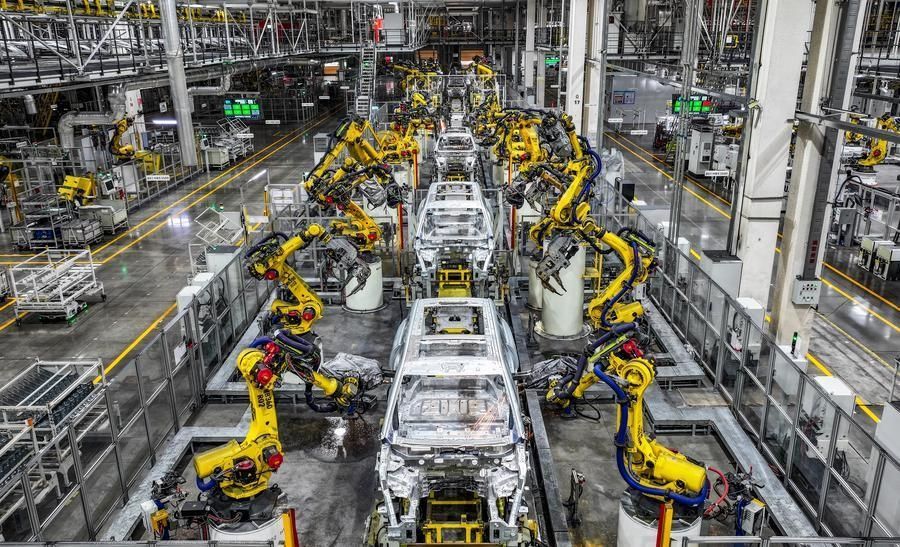
-
上一篇
-
下一篇
- 最近发表
- 随机阅读
-
- 伊议长:伊朗条件得到满足前霍尔木兹海峡将保持关闭
- 江苏苏州:5932米!太仓港完成最后一块“拼图”,引领苏州智造奔赴“海上丝路”!
- 沿青藏铁路 看“天路”传奇
- 一张“农民工地图” 打通供需两端 农民工高质量就业有底气
- 伊议长:伊朗条件得到满足前霍尔木兹海峡将保持关闭
- 嘉鱼农民金玉明4首“长江情歌” 唱尽簰洲湾28年变迁
- 韩国游客第一次打卡八卦城 直呼“这座城市太神奇了!”
- 野外灭绝警示后迎来转机 我国首次在长江放流野化长江鲟
- 德国选手兹维列夫首夺美网男单冠军
- 专访:希望亚太经合组织各方深化团结合作——访泰国泰中“一带一路”研究中心主任威伦·披差翁帕迪
- 野外灭绝警示后迎来转机 我国首次在长江放流野化长江鲟
- 总台曝光:化工废料翻新成一次性牙刷,有些流入酒店、民宿……
- 肯尼亚获2029年田径世锦赛主办权 系非洲首次
- 前日本人气女星滨崎真绪月薪3.4万招小编:要求会中文
- 鄂州花湖国际机场高速二期7月底通车
- 特朗普全国讲话,扬言两到三周内终结伊朗威胁,原油应声暴涨近6%
- 五角大楼“披萨指数”飙升!特朗普提前返回白宫
- 奥克兰理工大学留学概况与申请解析
- 图解:中国方案为亚太发展繁荣注入正能量
- 特朗普讲话未达预期油价强势反弹,慢节奏冲突下的定价修正
- 搜索
-