Feature: Iowa farmers look forward to more stable China
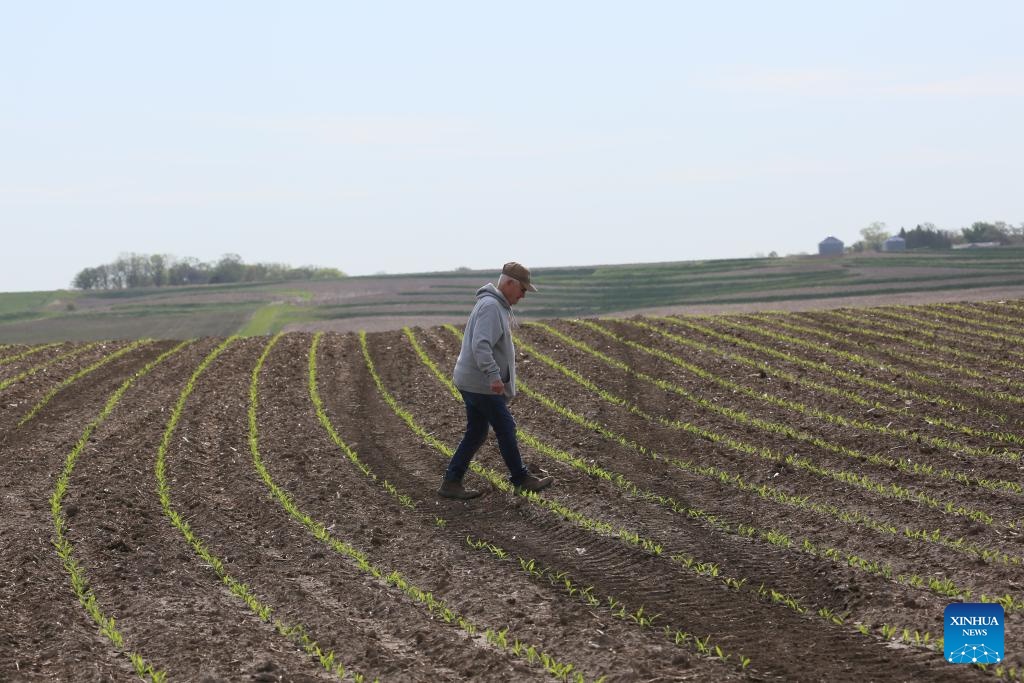
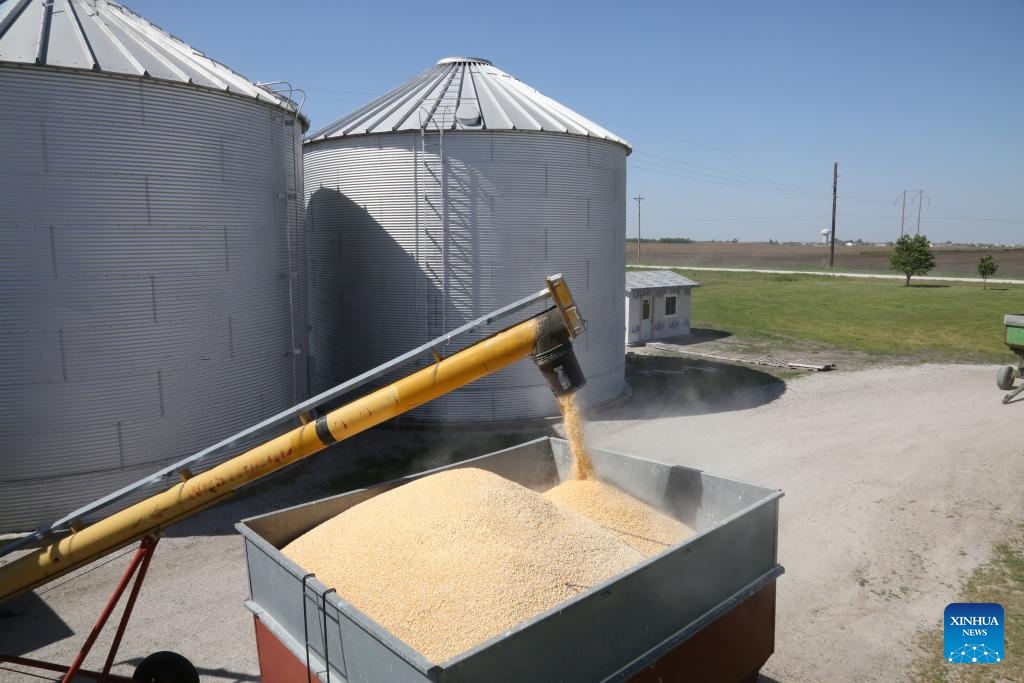
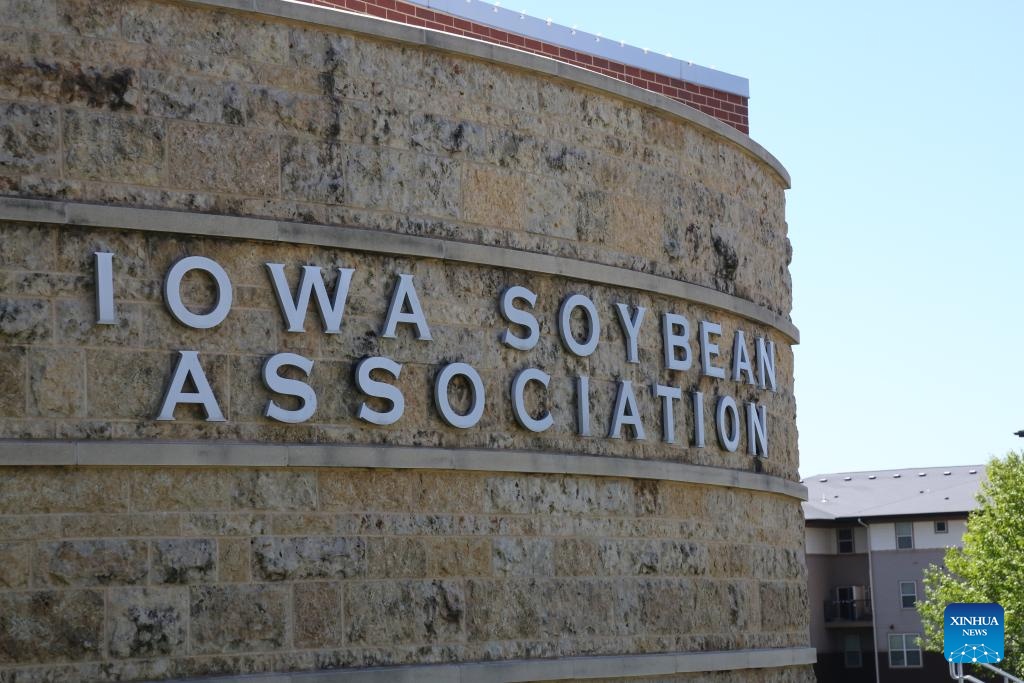
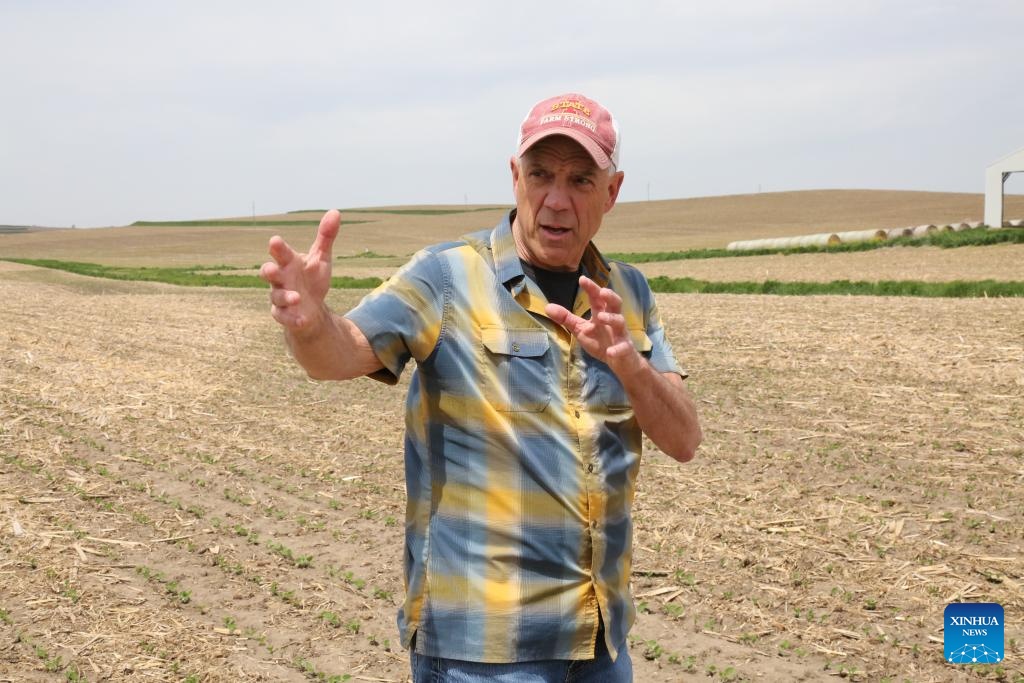
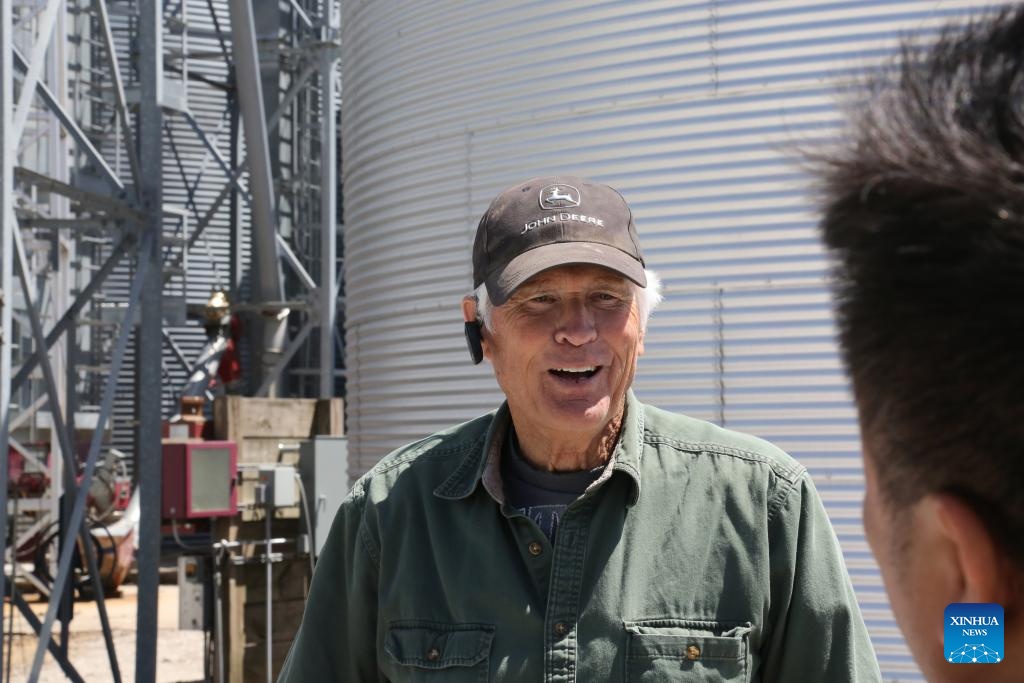
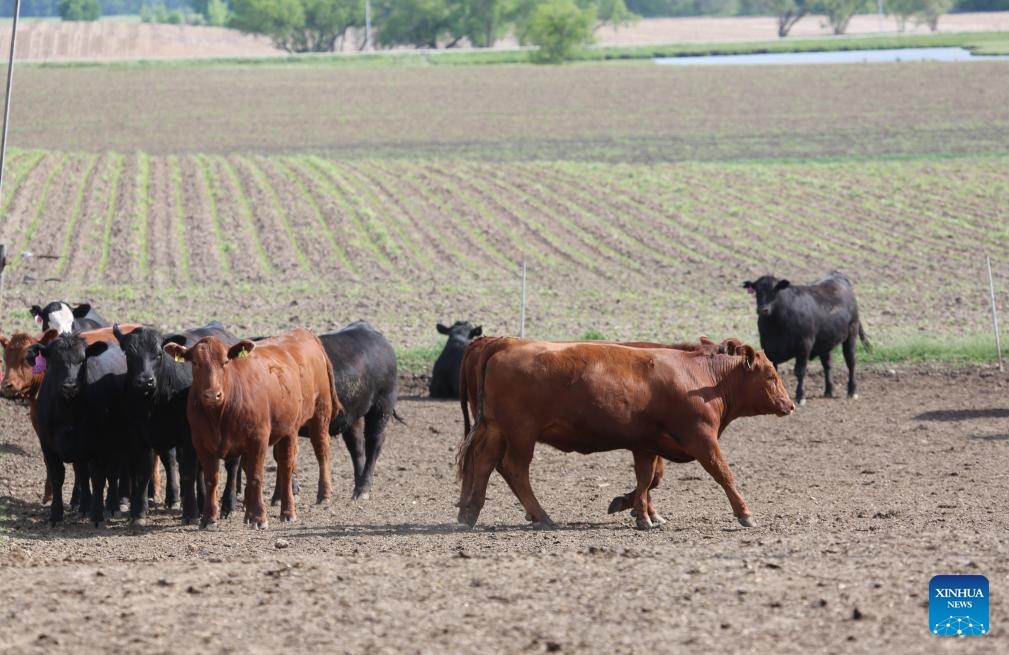
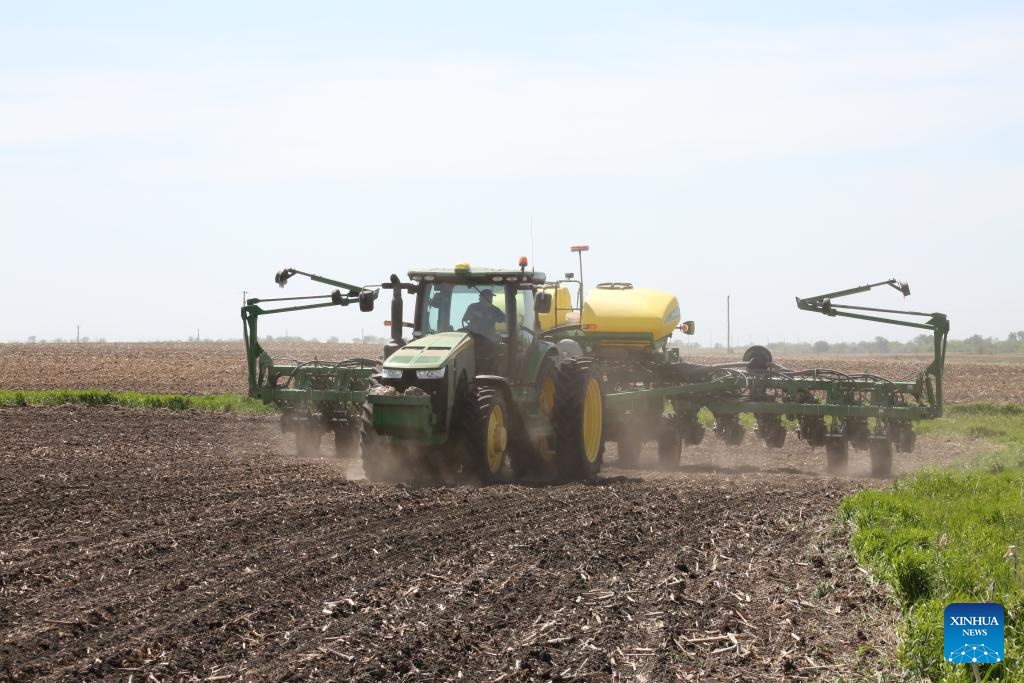
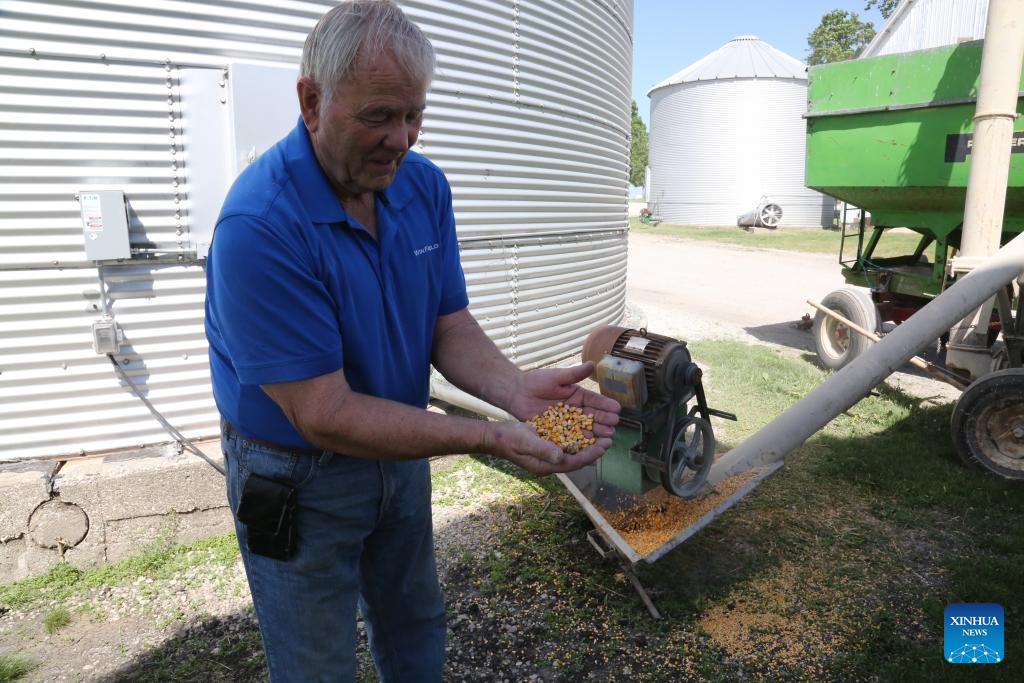
Randy Renze (L) and Scott Renze check a seeding machine at a farm in Manning, Iowa, the United States, on May 12, 2026. As China and the United States pledged to advance a constructive relationship of strategic stability following the recent summit in Beijing, farmers and agricultural groups in the U.S. Midwest voiced hope that more stable bilateral ties could help ease growing uncertainty in American agriculture.(Xinhua/Zhang Fengguo) by Xinhua writers Yang Shilong, Xie E, Zhang Fengguo DES MOINES, the United States, May 29 (Xinhua) -- As China and the United States pledged to advance a constructive relationship of strategic stability following the recent summit in Beijing, farmers and agricultural groups in the U.S. Midwest voiced hope that more stable bilateral ties could help ease growing uncertainty in American agriculture. For farmers in Iowa, one of the country's largest agricultural states, predictability has become increasingly difficult amid global economic volatility, rising production costs and geopolitical tensions. "You can't -- nothing's predictable," said LaVon Griffieon, who farms with her husband Craig near Ankeny, Iowa. The Griffieons said recent years have brought sharp increases in fuel, fertilizer and equipment costs, placing growing financial strain on many family farms. "The day the Iran war started, our fuel prices jumped 30 cents," Craig Griffieon said, adding that prices kept rising for several days. The couple recently spent about 11,000 U.S. dollars to fill a diesel tank used for tractors and farm machinery. Across Iowa, farmers described an industry increasingly shaped by forces beyond their control, including extreme weather, inflation, global conflicts and policy uncertainty. Analysts say many of the current pressures facing U.S. agriculture are closely tied to policy shifts in recent years, including tariff wars, supply-chain disruptions and escalating geopolitical tensions that have contributed to higher operating costs and greater market uncertainty. Farmers noted that rising fuel prices affect nearly every stage of agricultural production, from transporting fertilizer and seed to planting, harvesting and shipping crops. "When you increase that fuel cost, it isn't just driving down the road, it's every little piece," said Randy Renze, who farms with his brother Scott near Manning, Iowa. Scott Renze said modern agriculture now requires farmers to constantly adapt to multiple overlapping risks. "You have economic impacts, political impacts, weather impacts, disease impacts," he said. "All of those things become part of the daily management." To cope with volatility, some producers have diversified into livestock and other agricultural sectors in an effort to spread risk and improve long-term resilience. "At least when you have livestock, you can potentially spread the risk," Randy Renze said. Agricultural industry groups welcomed signs of improved communication between Beijing and Washington, saying stable relations between the two countries are important not only for farmers, but for global food security and broader economic stability. Grant Kimberly, senior director of market development for the Iowa Soybean Association, said farmers have experienced growing financial pressure since 2023 as production costs rose while commodity prices remained under pressure. "It's been a very challenging environment," Kimberly said. Kenneth Quinn, president emeritus of the World Food Prize Foundation, said agriculture remains one of the most practical and mutually beneficial areas for cooperation between China and the United States. "Farmers need stability and predictability," Quinn said, adding that when farmers make planting decisions and purchase inputs, they need confidence about the future. Quinn added that instability in global energy markets, particularly around key shipping routes in the Middle East, has increased uncertainty for agricultural producers worldwide. Observers say the latest China-U.S. summit has sent a positive signal to global markets at a time when many industries are seeking stability amid economic headwinds and geopolitical tensions. For many farmers in Iowa, the renewed emphasis on dialogue and constructive engagement between Beijing and Washington is seen as an encouraging step toward reducing uncertainty and supporting long-term global economic stability. "It has to be a win-win situation," said Rick Kimberly, a longtime Iowa farmer and the father of Grant. ■ A farmer inspects corn seedlings at a farm in Atlantic, Iowa, the United States, on May 11, 2026. As China and the United States pledged to advance a constructive relationship of strategic stability following the recent summit in Beijing, farmers and agricultural groups in the U.S. Midwest voiced hope that more stable bilateral ties could help ease growing uncertainty in American agriculture.(Xinhua/Zhang Fengguo) LaVon Griffieon (R) speaks during an interview with Xinhua at her farm in Ankeny, Iowa, the United States, on May 15, 2026. As China and the United States pledged to advance a constructive relationship of strategic stability following the recent summit in Beijing, farmers and agricultural groups in the U.S. Midwest voiced hope that more stable bilateral ties could help ease growing uncertainty in American agriculture.(Xinhua/Zhang Fengguo) A truck is loaded with corn seeds at Craig & Lavon Griffieon Farm in Ankeny, Iowa, the United States, on May 15, 2026. As China and the United States pledged to advance a constructive relationship of strategic stability following the recent summit in Beijing, farmers and agricultural groups in the U.S. Midwest voiced hope that more stable bilateral ties could help ease growing uncertainty in American agriculture.(Xinhua/Zhang Fengguo) Photo taken on May 13, 2026 shows the building of the Iowa Soybean Association in Ankeny, Iowa, the United States. As China and the United States pledged to advance a constructive relationship of strategic stability following the recent summit in Beijing, farmers and agricultural groups in the U.S. Midwest voiced hope that more stable bilateral ties could help ease growing uncertainty in American agriculture.(Xinhua/Zhang Fengguo) Randy Renze speaks during an interview with Xinhua at his farm in Manning, Iowa, the United States, on May 12, 2026. As China and the United States pledged to advance a constructive relationship of strategic stability following the recent summit in Beijing, farmers and agricultural groups in the U.S. Midwest voiced hope that more stable bilateral ties could help ease growing uncertainty in American agriculture.(Xinhua/Zhang Fengguo) Rick Kimberly speaks during an interview with Xinhua at his farm in Maxwell, Iowa, the United States, on May 14, 2026. As China and the United States pledged to advance a constructive relationship of strategic stability following the recent summit in Beijing, farmers and agricultural groups in the U.S. Midwest voiced hope that more stable bilateral ties could help ease growing uncertainty in American agriculture.(Xinhua/Zhang Fengguo) Cattle are seen in Bridgewater, Iowa, the United States, on May 11, 2026. As China and the United States pledged to advance a constructive relationship of strategic stability following the recent summit in Beijing, farmers and agricultural groups in the U.S. Midwest voiced hope that more stable bilateral ties could help ease growing uncertainty in American agriculture.(Xinhua/Zhang Fengguo) Kenneth Quinn, president emeritus of the World Food Prize Foundation, speaks during an interview with Xinhua in Des Moines, Iowa, the United States, on May 13, 2026. As China and the United States pledged to advance a constructive relationship of strategic stability following the recent summit in Beijing, farmers and agricultural groups in the U.S. Midwest voiced hope that more stable bilateral ties could help ease growing uncertainty in American agriculture.(Xinhua/Zhang Fengguo) A farmer operates a seeding machine at Rick Kimberly Farm in Maxwell, Iowa, the United States, on May 14, 2026. As China and the United States pledged to advance a constructive relationship of strategic stability following the recent summit in Beijing, farmers and agricultural groups in the U.S. Midwest voiced hope that more stable bilateral ties could help ease growing uncertainty in American agriculture.(Xinhua/Zhang Fengguo) Craig Griffieon shows corn seeds during an interview with Xinhua at his farm in Ankeny, Iowa, the United States, on May 15, 2026. As China and the United States pledged to advance a constructive relationship of strategic stability following the recent summit in Beijing, farmers and agricultural groups in the U.S. Midwest voiced hope that more stable bilateral ties could help ease growing uncertainty in American agriculture.(Xinhua/Zhang Fengguo)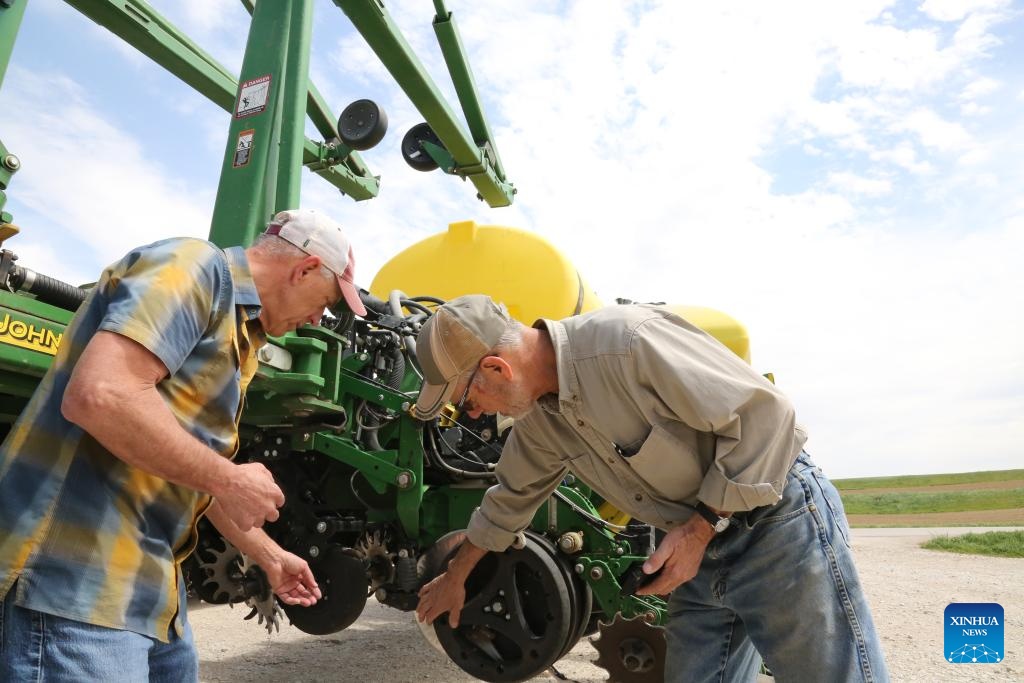


-
上一篇
-
下一篇
- 最近发表
- 随机阅读
-
- 第28届 “将军杯、木兰杯” 青少年网球赛总决赛落幕
- Xizang's heavenly road: They paved it with their lives
- 重回浣熊市地狱!生存恐怖IP新作《生化危机:爆发夜》曝首支预告
- 全国玉米产业盛会档期定了,800余款玉米将在武汉集中亮相
- 福建省信访局党组书记、局长朱百里接受审查调查
- 精准宣教!湖北一老一小交通安全防护网越织越密
- 《湖北大别山药用植物图志》发布 系统化梳理大别山药用植物资源
- 40多次任务、36小时待命 他们用29年诠释:航天无小事
- 特朗普:也门胡塞武装同意不与美国交战
- 《城市:天际线》之外从零建大都市?《纪元117》领衔推荐
- 鄂城区税务局扎实开展第六个“民法典宣传月”活动
- 武汉多部门走进火车站,宣讲5·26我爱路铁路安全
- 家长举报四川富顺一学校食堂使用劣质肉,官方:正在检验检测
- 韩国举办“宝可梦路跑”活动 5000人化身鲤鱼王奔跑
- “吃”二氧化碳能变硬 绿色低碳成建材行业新趋势
- 亚朵一骑绝尘,住宿和餐饮业的研发投入都用在哪里?|2025行业科创解读(十四)
- 北大、复旦校长,接连发出警告
- 玩家解锁另类浏览方式迂回使用Switch2观看油管!
- 全素人演员!小成本电影《给阿嬷的情书》爆火出圈
- 《命运石之门:重启》官宣定档 实体多版本内容超值
- 搜索
-